📄Seoul street food is cheap, so is a guided food tour worth it? What a tour actually solves, when you're better off DIY, and who gets the most value.
ℹ️Quick Answer
A Seoul food tour is worth it when you value predictability over experimentation. Seoul's street food is cheap — a market meal costs $20–30 — so you're not paying a tour for the food. You're paying for a guide who skips the 30–40 minute queues, translates Korean-only menus, steers you to the best stalls, and adds cultural context. That's valuable for first-timers, travelers with limited time, or the language-anxious. Confident, budget-minded eaters may prefer exploring on their own.
The question "is a Seoul food tour worth it?" doesn't have a universal yes or no — it has a condition. A food tour is worth it when you value predictability over experimentation. Because here's the thing that makes Seoul different from many food-tour destinations: the food itself is genuinely cheap. You can eat a full, delicious meal at Gwangjang Market for $20–30, so a tour costing several times that clearly isn't about the price of the dishes.
What you're actually buying is everything layered around the food: routing intelligence, vendor reliability, translation, and control over your time. If those things matter to you — if you'd rather arrive at the right stall than wander and gamble — a tour delivers real value. If you relish the adventure of figuring it out yourself and don't mind the occasional mediocre dish or wrong turn, that value shrinks. The honest answer, in other words, depends less on Seoul and more on what kind of traveler you are.
❓ Is a Seoul food tour worth it?
It's worth it if you value predictability, convenience, and cultural context over the adventure of exploring solo. Seoul's street food is cheap — a full market meal costs $20–30 — so you're not paying a tour for the food itself. You're paying for a guide who skips long queues, translates Korean-only menus, picks the best stalls, and explains what you're eating. That's genuinely valuable for first-timers, travelers short on time, and anyone anxious about the language barrier. Confident, budget-minded eaters who enjoy figuring it out themselves may get less from it.
What a Food Tour Actually Solves
To judge whether a tour is worth it, it helps to know the real problems it removes — because Seoul's markets, for all their affordability, come with genuine friction for a first-time visitor. The famous stalls, especially the Netflix-featured ones at Gwangjang, can have 30 to 40 minute queues at peak times. Menus at traditional stalls are frequently Korean-only and inconsistent, so ordering is a guessing game. And quality and pricing vary widely between vendors — some stalls are excellent, others are mediocre tourist traps, and it's genuinely hard to tell which is which on your first visit.
A good tour dissolves all of that. The guide knows which vendors are worth your limited stomach space, handles the ordering and translation, times the visit to avoid the worst queues, and sequences the dishes so you try the right things in the right order — often at stalls you'd never have found or felt confident approaching alone. On top of the logistics, you get the cultural layer: the stories, history, and customs that turn eating into understanding. For someone with one shot at a Seoul market, that curation is the whole point.
The trade-off: A tour removes the friction of queues, language, and stall-roulette — but that friction is also part of the adventure for some travelers. If discovering a great stall yourself is the joy of travel for you, a tour takes some of that away; if it just sounds stressful, a tour is exactly what you want.
When You're Better Off Doing It Yourself
Honesty cuts both ways, and there are real situations where a tour isn't the right spend. If you're a confident, adventurous eater who's comfortable pointing at what looks good and rolling with the occasional miss, Seoul's markets are approachable enough to navigate solo — plenty of travelers do exactly that and love it. If you're on a tight budget, the math is stark: the same dishes cost a fraction of the tour price if you order them yourself. And if you're a repeat visitor who already knows the markets, or someone who's done the research and has a list of specific stalls to hit, you may not need a guide to replicate what you can now do on your own.
Translation apps have also made the language barrier lower than it used to be, and markets like Gwangjang have become familiar enough that a prepared traveler can have a great time independently. None of this makes a tour worthless — it just means the value is lower for these travelers. The key is being honest with yourself about which camp you're in, rather than defaulting to "book the tour" or "skip it" out of habit.
The trade-off: Going solo saves real money and preserves the thrill of discovery, but you shoulder the queues, the language, and the risk of eating at the wrong stall. For confident, budget-conscious, or repeat travelers that's a fair trade; for first-timers with limited time, it usually isn't.
❓ Is it better to do a Seoul food tour or explore on your own?
Both are valid — it depends on you. Exploring on your own is far cheaper (a market meal is $20–30 versus a tour costing several times that) and preserves the adventure, and Seoul's markets are approachable enough that confident eaters manage well solo, especially with translation apps. A tour is better if it's your first visit, your time is limited, you're anxious about Korean-only menus, or you want cultural context and someone to skip the queues and pick the best stalls for you. A popular hybrid: take a tour on day one to learn the ropes, then explore solo for the rest of your trip.
Who Gets the Most Value
The clearest way to decide is by traveler type, because the value of a tour varies enormously depending on who you are. First-time visitors get the most out of it — the orientation, translation, and stall curation pay off immediately and set up the rest of the trip. Travelers with limited time benefit hugely too, since a tour compresses the best of a market into a couple of efficient hours instead of a day of trial and error. And anyone with dietary restrictions or real anxiety about the language barrier gets outsized value from a guide who removes those obstacles entirely.
On the other end, confident adventurous eaters, budget backpackers, and repeat visitors get the least incremental value — not zero, but less. And some travelers sit in the middle: a culture-focused visitor might book a tour purely for the stories and context, even if they could navigate the food alone. Match your own profile honestly and the decision becomes obvious.
You Are…
Worth It?
Why
First-time visitor
🟢 Definitely
Orientation, translation, and curation pay off immediately
Limited time
🟢 Definitely
Compresses the best of a market into a couple of hours
Dietary restrictions
🟢 Yes (specialist tour)
A guide removes the risk of not being able to eat
Nervous about the language barrier
🟢 Yes
Ordering and translation handled for you
Culture-focused traveler
🟡 Often
Worth it for the stories and context alone
Confident, adventurous eater
🟡 Maybe
You can navigate solo; a tour is a nice-to-have
Budget backpacker
🔴 Often not
The same food costs a fraction if you DIY
Repeat visitor who knows the markets
🔴 Usually not
You can replicate it on your own
The trade-off: Booking a tour that doesn't match your profile means overpaying for value you won't use, while skipping one that does match means a harder, less rewarding first visit. The goal isn't "always book" or "always skip" — it's matching the decision to the kind of traveler you actually are.
❓ Are Seoul food tours worth it for first-time visitors?
Yes — first-timers get the most value of any traveler. On a first visit, the barriers are highest: you don't know which stalls are good, the menus are often Korean-only, the famous stalls have long queues, and you have limited time to figure it all out. A tour removes every one of those obstacles and adds cultural context, turning a potentially overwhelming market into an easy, memorable meal — and teaching you enough to explore confidently on your own afterward. For a first Seoul visit, a food tour is usually well worth it; for repeat visitors who know the ropes, less so.
How to Make Sure It's Worth It
If you decide a tour is right for you, a few choices determine whether it actually delivers. The single most important factor is the guide — across every tour, a warm, knowledgeable host is what separates a memorable experience from a forgettable one, so prioritize tours with a strong track record for their guides. Next, look for a good tastings-to-price ratio: a tour serving ten-plus dishes is better value than one serving five for a similar price. And choose the right area and time for what you want — a lunchtime Gwangjang tour for classic market energy, or an evening tour for drinks and atmosphere.
Finally, read the inclusions carefully so the tour matches your expectations: how many tastings, whether drinks and a full meal are included, the group size, and any dietary accommodation. A tour that fits your appetite, budget, and interests is almost always worth it; a mismatched one — too big a group, too few tastings, the wrong area — is where the disappointment comes from. The best single strategy for many travelers is a hybrid: take one well-chosen tour early in the trip, then use what you've learned to explore the markets on your own.
The trade-off: Vetting the guide, the tastings, and the inclusions takes a little research before booking. It's the difference between a tour that's genuinely worth every dollar and one that leaves you feeling you overpaid — and it's entirely within your control.
This is general guidance to help you decide; the value of any specific tour depends on the guide, the inclusions, and how well it matches your priorities. Prices and tour details reflect current 2026 ranges and vary by operator, season, and demand — always confirm what's included and the current price before booking.
About the Author
Intercoper Curator Team
Travel Analysts
Our team researches and curates tour experiences. We combine local knowledge with rigorous verification to recommend only tours worth your time.



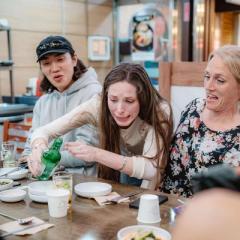 Jongno Market Street Food Walk with Drinking Games$79
 Seoul Market Food Walk with 8+ Tastings$96
 Small-Group Seoul Market Food Walk, 6–8 Tastings$70