The Challenge: Why General Food Tours Don't Work
If you have dietary restrictions, the most important thing to understand about Seoul's markets is that Korean food hides animal products in places you wouldn't expect. It's not just the obvious meat dishes — an estimated
95% of market stalls add fish sauce or meat powder to their food, so even a seemingly vegetable-based dish is often not truly vegetarian or
vegan. The two classic traps are
anchovy broth (dashi), which flavors almost every soup, and
fish sauce or fish paste, which is in most kimchi and much commercial gochujang (the red chili paste). Even the beloved bindaetteok pancake is frequently fried in lard.
This is exactly why so many standard Seoul food tours state plainly that they're "not suitable for vegans or Muslim travelers" — the operators know they can't guarantee it. Joining a general tour and hoping to pick around the menu is a genuine risk: you may end up unable to eat most of what's offered, or unknowingly eating something you're avoiding. The solution isn't to skip food tours altogether — it's to book one built specifically for your diet, with a guide who has done the vetting in advance.
❓ Is it hard to eat vegan or vegetarian in Korean markets?
It's harder than it looks, because animal products are hidden throughout Korean food. Around 95% of market stalls use fish sauce or meat powder, anchovy broth (dashi) is in nearly every soup, and most kimchi and commercial gochujang contain fish sauce or paste — so even vegetable dishes often aren't truly vegan or vegetarian. Bindaetteok pancakes are often fried in lard, too. This is why general food tours frequently say they can't accommodate vegans. The reliable solution is a dedicated plant-based tour with a guide who has pre-checked every stall and handles the ordering for you.
Vegan and Vegetarian Food Tours
The good news for plant-based travelers is that Seoul now has genuinely excellent dedicated vegan and vegetarian food tours, and they solve the problem completely. These tours run
fully plant-based routes through Gwangjang Market, with guides who have personally checked every stall in advance to map out a safe, delicious sequence — no meat, fish, dairy, or eggs, and no anxiety about hidden fish sauce. The guide handles all the ordering and translation, so you simply eat and enjoy. Several are chef-designed and offer a wide choice of dishes; because they run as small private or intimate groups (often capped around eight guests), booking ahead is essential.
A useful tip echoed by these tour guides:
do a plant-based food tour early in your trip. Beyond the meal itself, a good guide teaches you how to navigate Korean food as a vegan or
vegetarian for the rest of your visit — which dishes are safe, what to ask, and which ingredients to watch for. That knowledge is arguably worth as much as the tour itself. Note that most plant-based tours can't guarantee strict gluten-free or severe-allergy safety in a busy shared market, so if that applies to you, contact the operator to arrange a private, customized option.
The trade-off: A specialist vegan tour has fewer departures and smaller capacity than general tours, so it needs booking further ahead and may cost a little more per person. But it turns an anxious, restrictive situation into a relaxed, abundant one — and teaches you to eat well plant-based across the rest of your Korea trip.
What Vegans and Vegetarians Can Actually Eat
Korean cuisine, for all its fish-sauce pitfalls, has a deep vegetarian and vegan tradition once you know where to look. The standout is
temple cuisine (사찰음식) — a centuries-old Buddhist culinary tradition that is naturally vegan, using no meat, no fish, and not even alliums like garlic and onion. It's one of the most rewarding plant-based food experiences in the world, and
Insadong is a good area to find it. Beyond temple food, several market and street dishes work well:
mayak gimbap (the mini seaweed rolls are usually vegetarian),
bibimbap (easily made vegan — request no egg and no meat),
boribap (a barley-and-rice mix),
japchae (glass noodles, ask about the seasoning), and increasingly
plant-based versions of tteokbokki and Korean fried "chicken" at dedicated vegan spots.
Seoul's vegan scene has grown dramatically — central Seoul now has around 100 vegan or vegan-friendly restaurants, up from a couple of dozen a decade ago, concentrated in Hongdae and Yeonnam-dong (cafés and casual spots), Insadong (temple cuisine), and Gangnam (upscale plant-based). The HappyCow app is the standard tool for finding them. So while the markets require care, eating vegan or vegetarian across Seoul as a whole is very doable.
| Dish | Suitable For | Watch For |
|---|
| Temple cuisine (사찰음식) | 🟢 Vegan (naturally) | None — no meat, fish, or alliums |
| Bibimbap | 🟢 Vegan on request | Ask for no egg, no meat, veg gochujang |
| Mayak gimbap | 🟡 Usually vegetarian | Confirm no fish/meat filling |
| Boribap (barley rice mix) | 🟡 Often vegan | Check the sauce/seasoning |
| Japchae (glass noodles) | 🟡 Can be vegan | Ask about beef and seasoning |
| Tteokbokki | 🟡 Vegan at dedicated spots | Broth often uses anchovy/fish cake |
| Bindaetteok | 🔴 Often not vegan | Frequently fried in lard |
| Most soups & kimchi | 🔴 Usually not | Anchovy dashi; fish sauce in kimchi |
❓ Are there vegan and vegetarian food tours in Seoul?
Yes — Seoul has dedicated plant-based food tours, most based at Gwangjang Market, that run 100% vegan routes (no meat, fish, dairy, or eggs) with guides who've pre-vetted every stall and handle all ordering. They're often chef-designed, capped at small group sizes (around eight guests), and highly regarded. Book ahead, as capacity is limited. Beyond tours, Seoul has a growing vegan scene — around 100 vegan-friendly restaurants centered on Hongdae, Insadong (for naturally-vegan Buddhist temple cuisine), and Gangnam — findable via the HappyCow app.
Halal Food Tours and Muslim-Friendly Options
For Muslim travelers, the honest picture is that halal is harder to find than vegan in Seoul, and dedicated halal food tours are rarer — but options do exist, and they're growing. The heart of halal dining in Seoul is Itaewon, specifically Usadan-ro, the "Muslim Street" behind the Seoul Central Mosque, which has the city's highest concentration of halal restaurants and grocery stores. This is the area to base a Muslim-friendly food experience, whether guided or independent, and it's home to well-regarded spots serving halal versions of Korean classics like bulgogi, bibimbap, and samgyetang.
To navigate the wider city, it helps to know that the
Korea Tourism Organization classifies restaurants into four Muslim-friendly levels — from fully halal-certified down to pork-free — which takes much of the guesswork out of eating beyond Itaewon. Some night markets, including
Myeongdong, offer a selection of Muslim-friendly stalls (lamb skewers and similar), and prayer rooms are available at the mosque and certain public locations. Because dedicated halal tours are limited, the best approach is often to
contact a tour operator directly to arrange a customized Muslim-friendly route, or to combine an Itaewon food walk with the KTO's classification guide. Where no halal option is nearby, seafood dishes without pork or a vegan restaurant make reliable fallbacks.
| Level | What It Means |
|---|
| Halal Certified | Officially certified halal by a recognized body |
| Self Certified | Owner is Muslim; serves halal but not formally certified |
| Muslim Friendly | Some halal menu items; may serve alcohol |
| Pork Free | No pork on the menu, but not otherwise halal |
❓ Can Muslim travelers find halal food tours in Seoul?
They can, though dedicated halal food tours are rarer than vegan ones and often need to be arranged directly with an operator. The hub of halal dining is Itaewon — specifically Usadan-ro, the "Muslim Street" behind the Seoul Central Mosque — with the city's highest concentration of halal restaurants and shops. The Korea Tourism Organization also classifies eateries into four Muslim-friendly levels (from halal-certified to pork-free), which helps beyond Itaewon, and some night markets like Myeongdong have Muslim-friendly stalls. For a guided experience, contact an operator to customize a route, or base a food walk around Itaewon.
How to Eat Safely: Booking and Ordering Tips
A few habits make dietary-restricted eating in Seoul reliable rather than stressful. First and most important: book a specialist tour, not a general one. A dedicated vegan tour or a customized halal route removes the risk entirely, because the guide has done the vetting. Second, communicate your needs to the operator before booking — confirm exactly what can be accommodated, especially for halal, strict gluten-free, or severe allergies, none of which every tour can guarantee. Third, learn the key hidden ingredients to ask about: anchovy broth (dashi), fish sauce, fish paste in kimchi, and meat powder — a simple "does this contain fish sauce or anchovy?" goes a long way.
Beyond tours, arm yourself with the right tools: the HappyCow app for vegan and vegetarian restaurants, and the Korea Tourism Organization's Muslim-friendly restaurant classifications for halal. Base yourself near the right areas — Itaewon for halal, and Hongdae, Insadong, or Gangnam for vegan — so you're never far from a safe option. With a little preparation, travelers with dietary restrictions can eat as richly and adventurously in Seoul as anyone else; it just takes booking the right tour and knowing the right questions.
The trade-off: Eating with restrictions in Seoul takes more planning than it would for an unrestricted traveler — the right tour, the right questions, the right neighborhoods. But that modest effort unlocks a genuinely abundant food experience rather than a limited one, and specialist guides make it effortless once you've booked the right one.
Dietary tour availability, restaurant options, and the KTO classification system reflect current 2026 information and can change — vegan, gluten-free, and halal accommodation vary significantly by tour and restaurant, so always confirm exactly what can be provided directly with the operator or venue before booking, especially for strict allergies or halal certification. Hidden ingredients (fish sauce, anchovy broth, meat powder) are common in Korean food.



 Vegan Gwangjang Market 11-Tasting Food Walk$99
 Halal-Friendly Hands-On Korean Cooking Class$109
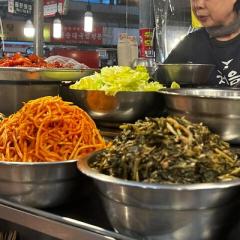 Vegan Gwangjang Market Chef-Led Food Walk$108.28